The Four Elements of Hip Hop: A Complete Guide to MCing, DJing, Graffiti Art, and Breakdancing
Hip hop is one of the most powerful cultural movements in modern history. But it is far more than music. At its core, hip hop is built on four key pillars: MCing, DJing, graffiti art, and breakdancing. Together, these four elements are a language, a way of life, and a tool for survival. They were born in one of the most overlooked communities in America — and they changed the world.
Whether you’re a longtime fan or brand new to the culture, this guide will walk you through the roots, growth, and lasting impact of each element.
The Origins of Hip Hop Culture: Where It All Began
Before looking at the four elements, it helps to understand the world that created hip hop.
In the early 1970s, the South Bronx was in deep trouble. Poverty, arson, and unemployment had torn the area apart. A highway project led by city planner Robert Moses had bulldozed through entire neighborhoods. As a result, thousands of Black and Latino families were left with very little. Gang activity was common, city services were scarce, and young people had been largely forgotten by the rest of society.
Yet, out of this hard environment, something remarkable happened. Young people began to create. They threw block parties. They spun records in new ways. They painted their names on subway cars. They danced in the street. What grew out of those moments was not just an art scene — it was a full cultural movement.
DJ Kool Herc, a Jamaican-American DJ from the West Bronx, is widely seen as the father of hip hop. On August 11, 1973, he hosted a back-to-school party at 1520 Sedgwick Avenue. There, he found a way to loop the most energetic parts of funk and soul records — the moments known as “breaks.” That party is now considered the birth of hip hop.
From that starting point, the culture grew quickly. Afrika Bambaataa, founder of the Universal Zulu Nation, gave hip hop a clear philosophy. He named the four core elements and pushed the idea that they belonged together as one culture. Grandmaster Flash pushed DJing further with new techniques. Meanwhile, a generation of MCs, dancers, and graffiti writers took the movement around the globe.
The First Element: MCing (Rapping)
What Is MCing?
MCing stands for “Master of Ceremonies” or “Mic Controller.” In short, it is the art of performing vocally over a beat. Most people today call it rapping. However, to call it just rapping is to miss the bigger picture. At its best, MCing blends poetry, storytelling, comedy, and social commentary into a single art form.
In the early days, the MC’s job was simple. They kept the crowd hyped at DJ-led parties with call-and-response phrases and off-the-cuff comments. Over time, though, this role grew into something much more complex. Today, MCing is judged by four main skills:
- Flow — how a rapper’s delivery fits the rhythm of the beat
- Lyricism — wordplay, storytelling, and the clever use of language
- Delivery — tone, emotion, and the way words are spoken
- Freestyle — making up rhymes on the spot, seen as the truest test of skill
The Social Power of the MC
What made MCing so powerful from the start was how easy it was to access. You did not need expensive gear or years of training. All you needed was something to say and the courage to say it.
Because of this, MCs became the voice of communities that had no mainstream stage. In 1982, Grandmaster Flash and the Furious Five released “The Message.” It painted a raw picture of city life that no news report had captured so clearly. Later, Public Enemy used the microphone as a tool against racism. N.W.A. documented what policing felt like in Black neighborhoods long before those stories reached wider audiences. Tupac wrote verses that were part street journal, part deep thinking.
MCing Today
Today, MCing is arguably the most popular form of music on the planet. Artists like Kendrick Lamar, J. Cole, Nicki Minaj, Cardi B, and Drake continue to push the art in new directions. They blend singing with technical rapping, draw from global music styles, and speak on topics from mental health to social justice.
New styles like SoundCloud rap, drill, trap, and Afrobeats-influenced hip hop show that MCing is still evolving. Around the world, MCs are adapting the form to reflect their own local lives and cultures. The element is very much alive.
The Second Element: DJing (Turntablism)
What Is DJing in Hip Hop?
In hip hop, DJing is not about pressing play on a playlist. Instead, the hip hop DJ is a musician. They use turntables, a mixer, and vinyl records as real instruments. Through techniques like scratching, beat juggling, cutting, and blending, DJs create entirely new sounds from existing recordings.
DJ Kool Herc started it all with the breakbeat loop. Then, Grandmaster Flash turned it into a precise skill. He developed ways to return to the exact point on a record with near-perfect accuracy. Soon after, DJs like Grandmaster DST and DJ Jazzy Jeff raised scratching to an art form. By the mid-1980s, DJing had become its own competitive discipline with its own community of fans.
Turntablism as Musical Creativity
The hip hop DJ did something bold. They took the record player — a device built to simply play back recorded sound — and turned it into a live instrument. This was a major act of creative reclaiming. Communities that could not afford studio time found a way to make new music from the records they already owned.
Furthermore, the techniques hip hop DJs created have shaped nearly all of modern music production. Sampling — taking pieces of old recordings and building new songs from them — became central to hip hop, electronic music, and even film scores. In many ways, the hip hop DJ changed how the whole world thinks about music.
DJing in the Digital Age
Digital tools like Serato and Traktor have made DJing more accessible than ever. Still, within hip hop culture, vinyl records remain deeply respected. The hands-on craft of turntablism still carries real weight.
Competitions like the DMC World DJ Championships and Red Bull 3Style continue to showcase DJs who push the limits of what is possible. In an age of computer-generated music, the human skill of a great DJ still stands out.
The Third Element: Graffiti Art
The Visual Language of Hip Hop
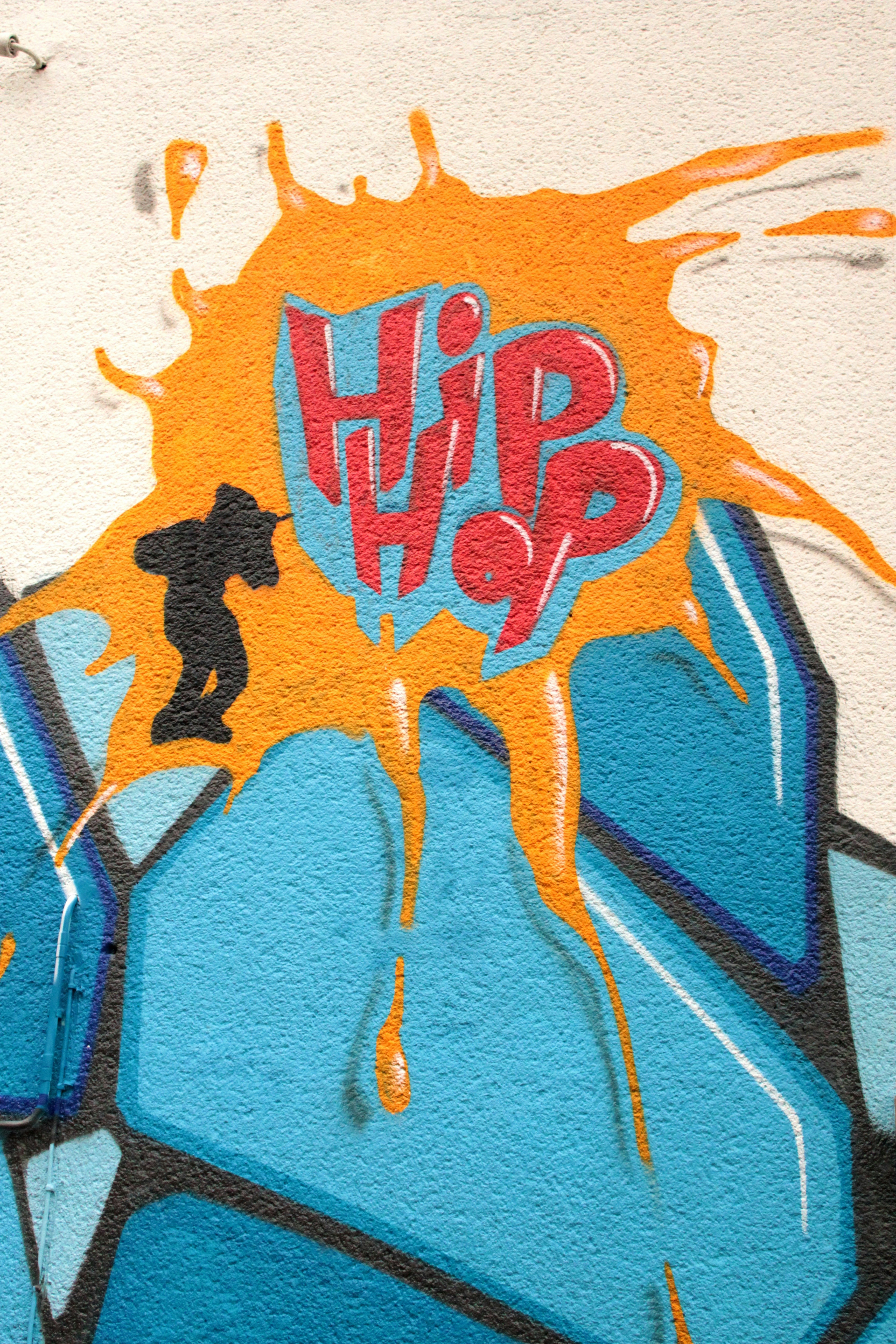
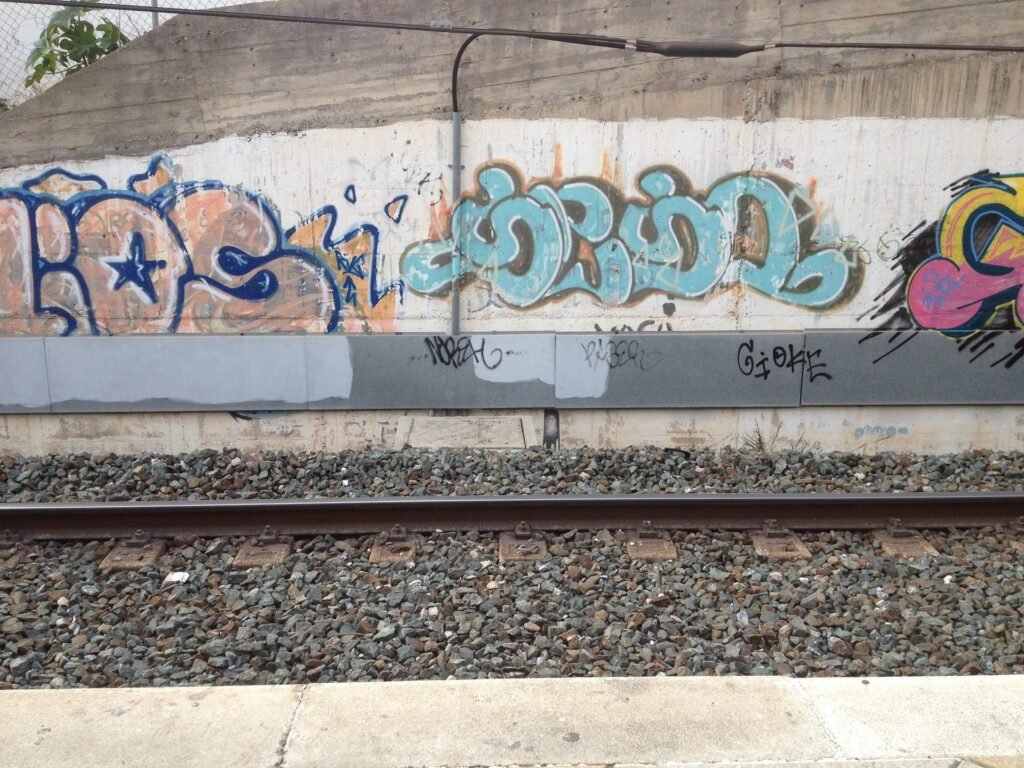
Graffiti is the visual side of hip hop. While DJs gave the culture its sound and MCs gave it its words, graffiti writers gave it something to look at. They turned plain city walls and subway cars into bold, colorful statements.
Graffiti in hip hop grew out of New York City in the late 1960s and early 1970s. Early writers like TAKI 183 and CORNBREAD became known for tagging their names all over the city. It was a simple but powerful message: I exist. I was here.
Then came the writers who took over New York’s subway cars through the mid-1970s and early 1980s. Artists like Phase 2, Dondi White, Lee Quiñones, and Lady Pink created huge, detailed pieces that covered entire trains. Their work could not be ignored.
The Styles and Vocabulary of Graffiti
Hip hop graffiti has its own set of styles, each requiring a different level of skill:
- Tag — a writer’s quick, personal signature
- Throw-up — a simple two-color piece done fast
- Piece (short for masterpiece) — a full, detailed, multicolor work
- Wildstyle — complex, interlocking letters that take real skill to read
- Mural — a large-scale work, often with figures and scenes
The goal was always to “get up” — to be seen as widely as possible. Respect came from how boldly and beautifully you worked.
From the Streets to the Gallery
The art world’s relationship with graffiti has always been complicated. In the 1980s, the same work that got writers arrested on the street was being sold in fancy galleries across Manhattan. Artists like Jean-Michel Basquiat and Keith Haring crossed into mainstream success while many in the graffiti world were still being treated as criminals.
Today, graffiti and street art exist on a wide spectrum. On one end, there are still writers going out at night to paint freight trains. On the other, large commissioned murals now cover buildings in cities worldwide. Artists like Os Gemeos, Banksy, Shepard Fairey, and Futura 2000 have built global careers on the visual style that started in the Bronx.
Within hip hop culture, graffiti remains a core and respected element. It is a reminder that the culture has always been about more than sound.
The Fourth Element: Breakdancing (B-Boying/B-Girling)
What Is Breakdancing?
Breakdancing — known inside the culture as b-boying or b-girling — is the physical voice of hip hop. It is a dance built on athletic power, creative thinking, rhythm, and personal style.
B-boys and b-girls dance to breakbeats — the looped drum sections that DJs made famous. The dance is built on four key parts:
- Toprock — standing footwork that opens the performance and sets the dancer’s style
- Downrock (Footwork) — ground-based patterns using the hands and feet
- Power moves — spinning and flipping tricks like windmills, headspins, and flares
- Freezes — held poses, often upside down, that end a section with impact
Like MCing, b-boying is mostly about improvisation. Dancers “battle” each other in cyphers — open circles where each person takes a turn. They are judged on creativity, timing, execution, and originality.
The Roots of B-Boying
B-boying draws from many movement traditions. These include Afro-Latin dances like salsa and mambo, African American social dances, capoeira, martial arts, and gymnastics. The mix of these styles into something new happened naturally on the streets of the Bronx.
Early crews like the Rock Steady Crew and the New York City Breakers shaped what b-boying looked like and what it stood for. Films like Breakin’ (1984) and Flashdance (1983) then spread the dance to new audiences around the world.
Breakdancing on the Olympic Stage
One of the biggest moments in b-boying’s history came in 2024, when the dance appeared at the Paris Olympics under the name “Breaking.” For many in the culture, this was exciting proof of how far the art form had come. For others, it raised real questions. Could a street art form truly survive in an Olympic setting? Could judges from outside the culture fairly score something built on personal expression?
That debate is, in many ways, very hip hop. The culture has always had to negotiate between staying true to its roots and reaching wider audiences.
B-Boying Today
Breaking communities now exist on every continent. Global events like the Red Bull BC One World Final and Battle of the Year bring together dancers from dozens of countries. Crews from Japan, South Korea, France, Brazil, and the United States regularly compete at the highest level. This shows just how far a dance born in the Bronx has traveled.
The Fifth Element: Knowledge
Afrika Bambaataa and the Universal Zulu Nation have long pointed to a fifth element that holds all four together: Knowledge — of yourself, your history, and the culture you are part of.
This fifth element is the reason hip hop has always been more than fun. It connects the MC’s social commentary, the DJ’s deep love of music history, the writer’s study of letterforms and style, and the b-boy’s understanding of movement traditions. To practice any of the four elements well is to be in conversation with history, community, and purpose.
Because of this, hip hop has produced generations of self-taught thinkers, artists, designers, and organizers. The culture pushes you to understand where you come from — and why that matters.
Why the Four Elements Still Matter Today
Hip hop turned 50 in 2023. Around the world, people reflected on just how much this culture has shaped modern life. Here is why the four elements still matter:
They offer a full creative toolkit. The four elements cover voice, sound, image, and movement. Together, they make up a complete way of expressing the human experience. Any creative person, in any field, can learn something from the way each element works.
They keep community history alive. The stories in MC verses, the music preserved by DJs, the images painted by graffiti writers, and the movement traditions carried by b-boys all serve as living records. They document communities that mainstream history has often left out.
They model a do-it-yourself approach. Hip hop was built by people with very little. No money, no studio access, no institutional support — yet they made something that changed the world. That spirit remains one of the most powerful models for creativity and community building in modern life.
They keep growing. None of the four elements is frozen in time. Each one has developed new techniques, new styles, and new global versions. They are not museum pieces. They are living practices.
Hip Hop as a Living Culture
The four elements of hip hop — MCing, DJing, graffiti art, and breakdancing — are not things of the past. They are the ongoing heartbeat of one of the most important cultural movements in human history.
Born from the creativity and strength of Black and Latino youth in the South Bronx, these elements have reached every corner of the world. Along the way, they have adapted and grown while keeping their core character: expressive, communal, competitive, and deeply human.
To truly understand hip hop is to understand these four elements. Not just as art forms, but as a way of moving through life. They teach us to speak our truth, to listen closely, to mark our presence, and to move with purpose. That is a lesson worth carrying forward.
Tags: hip hop culture, four elements of hip hop, MCing, DJing, graffiti art, breakdancing, b-boying, turntablism, hip hop history, South Bronx, DJ Kool Herc, Afrika Bambaataa, hip hop origins